
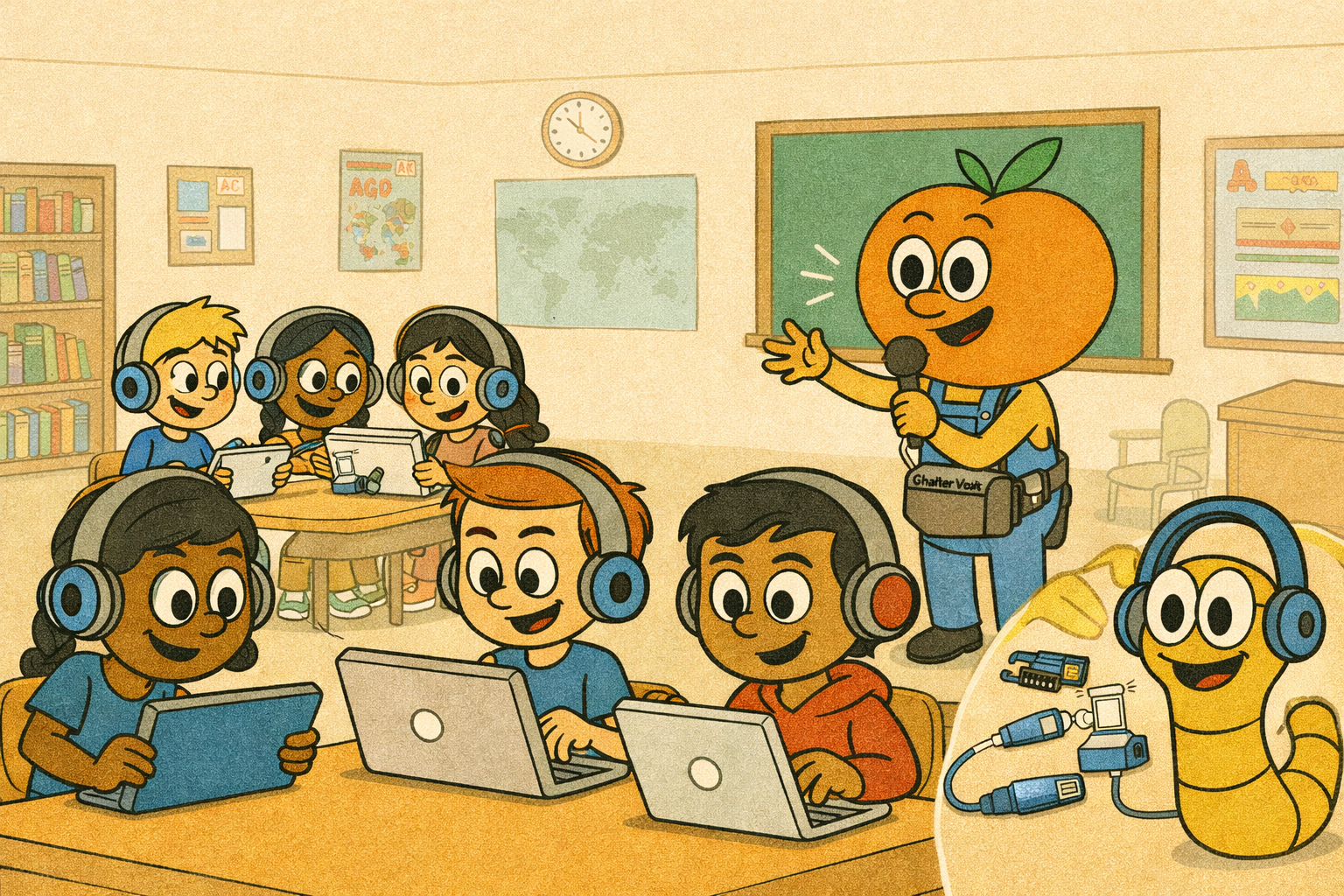
Classroom audio encompasses more than just student headphones. From teacher voice amplification to listening centers and device connectivity, a well-designed classroom audio setup ensures that every student can hear and engage with instructional content. This guide covers the complete classroom audio ecosystem.
Student Headphones: The Foundation
The most fundamental piece of classroom audio equipment is the student headphone. In today’s 1:1 and shared-device environments, students need reliable, durable headphones for:
- Reading comprehension and phonics programs
- Language learning applications
- Video-based instruction and virtual field trips
- Online standardized testing
- Music education and multimedia creation
- Video conferencing for hybrid learning
SchoolPHONES® offers three product families to cover every classroom scenario: K6 (Small Kids) for Pre-K to 4th grade, BK (Big Kids) for 5th grade and up, and LP/LPJ (Lab Partner) for shared and lab environments.
Teacher Voice Amplification
Studies show that 25-33% of instruction time can be lost when students in the back of the classroom can’t hear the teacher clearly. Teacher voice strain is also a leading cause of educator sick days. Voice amplification systems solve both problems.
The ChatterVOX® voice amplifier is a portable waist-pack system that projects the teacher’s voice clearly throughout the classroom without shouting. Benefits include:
- Reduced teacher vocal fatigue
- Better comprehension for all students, including those with hearing difficulties
- Portable design works in any room, on field trips, and in outdoor settings
- No classroom installation or wiring required
Listening Centers and Audio Hubs
Listening centers remain a staple of elementary classrooms, allowing small groups of students to listen to the same audio source simultaneously. Modern listening centers use headphone splitters connected to a tablet or Chromebook, replacing the cassette-player listening stations of previous decades.
Adapters and Connectivity
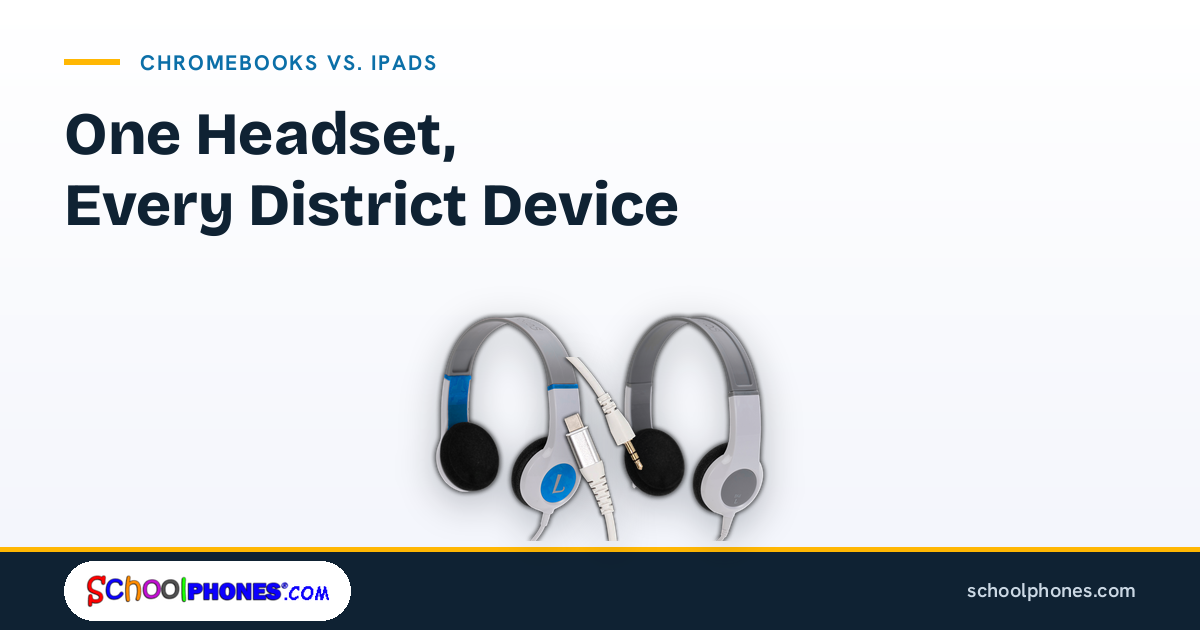
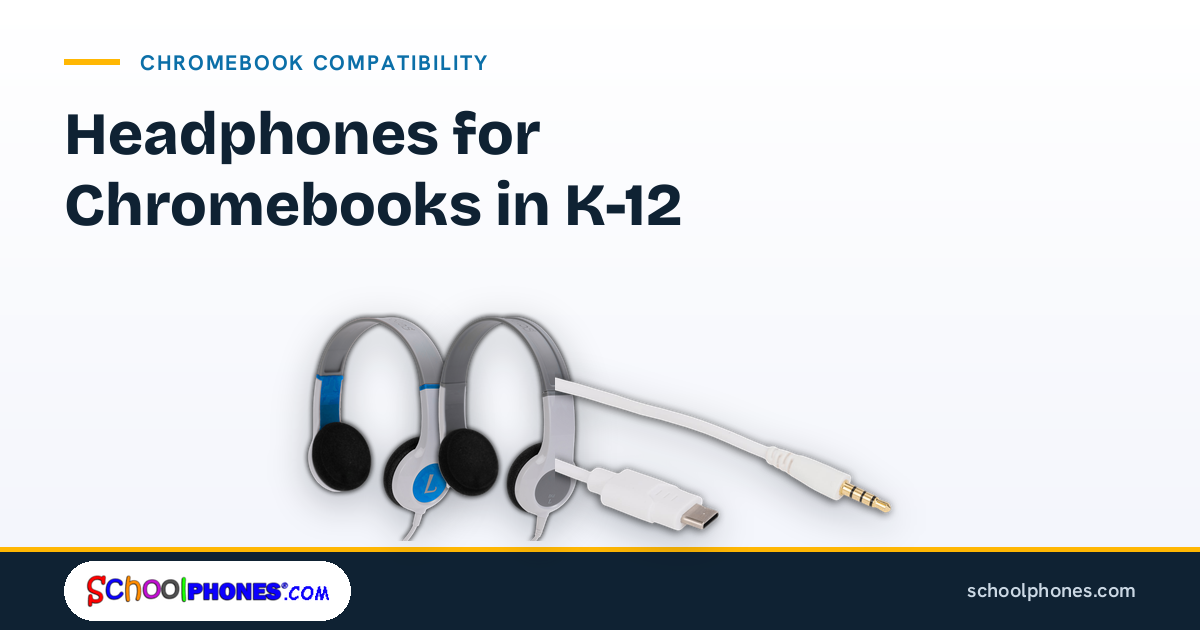
As devices evolve, adapter solutions bridge the gap between existing headphone inventories and new device ports. SchoolPHONES® offers USB-C and standard audio adapters to ensure your headphones work with every device in your fleet.
Building Your Classroom Audio Kit
A complete classroom audio setup includes:
- One headphone per student (or classroom set of 30)
- Replacement ear cushions for mid-year refresh
- Adapters for device compatibility (USB-C to 3.5mm for newer devices)
- A headphone splitter for small-group listening centers
- A teacher voice amplifier for whole-classroom instruction
Browse our complete catalog to build your classroom audio kit, or contact us for a personalized recommendation based on your classroom setup.
Voice Amplification for Teachers
Headphones solve what students hear. They do nothing for the other half of a classroom’s audio problem, which is whether every student can hear the teacher — from the back row, over ventilation noise, on the fifth hour of talking.
Teacher voice strain is an occupational injury, and it is cumulative. A waistband amplifier with a headset microphone lets a teacher speak at a conversational level and still be heard clearly across the room. It helps the students who need it most: those with hearing loss, auditory processing differences, or English as an additional language, all of whom lose the most when speech has to compete with room noise.
- ChatterVOX® Pro with headset mic — the standard classroom package, worn at the waist with a headset microphone that keeps the capsule at a constant distance from the mouth.
- The full ChatterVOX® range — including coaching amplifiers for gyms and field trips, where projection matters more than fidelity.
Teacher headphones and headsets are a related but separate need: staff running small-group instruction, recording lessons, or taking calls in a shared office want the same durable wired hardware the students use. An M-model media headset does that job, and it is the same BKM that sits in the testing lab. Our guide to ChatterVOX® voice amplification for schools covers sizing a system to a room.
Language Labs, ESOL Stations and Listening Centers
A language lab asks more of a headset than a classroom does. Students wear them for a full period rather than twenty minutes, the microphone is in constant use, and the same unit is worn by four or five different students across a day.
That combination is what the Lab Partner series is built for, and why it is specified differently from the classroom models:
- Circumaural cushions that sit around the ear rather than on it, which is what makes a full period tolerable.
- 40 mm drivers rather than the 30 mm used in the classroom series — more headroom for speech detail at moderate volume.
- A one-year warranty in shared use, where the K6 and BK classroom models carry 90 days in shared use. For a lab, this is the deciding specification.
- A SpringBoom™ microphone on the LPJ1M for ESOL headsets and speaking practice, holding position through a whole recording instead of drifting.
For a listening center where one source feeds several students, a 4-way headphone splitter turns a single device into four seats. Add Lab Partner Jr. headphones for the stations and a Classpack storage unit to keep the cords from becoming a knot between sessions. The full Lab Partner range is here.
Adapters: Making One Standard Work Across a Mixed Fleet
Most schools run more than one kind of device, and the audio connector is where that shows up. The point of a modular headset is that the fleet difference is absorbed by a cable rather than by buying different headphones for different rooms.
| Device | What it needs | Part |
|---|---|---|
| Chromebook or PC with a 3.5 mm jack | Standard TRS or TRRS cable | Replacement cable — $2.50 |
| USB-C only Chromebook, iPad or tablet | USB-C audio cable | USB-C cable — $7.50 |
| USB-A only desktop or cart | USB-A adapter | Audio adapters |
| Device pulled off the desk regularly | Magnetic breakaway cable | Breakaway cables |
One wrinkle worth knowing before ordering in quantity: analogue headsets with microphones use different plug wirings, and not every device expects the same one. That is why inexpensive conversion adapters exist alongside the cables. Check the Chromebook, iPad and tablet pages against your own fleet first.

Leave a Comment!