
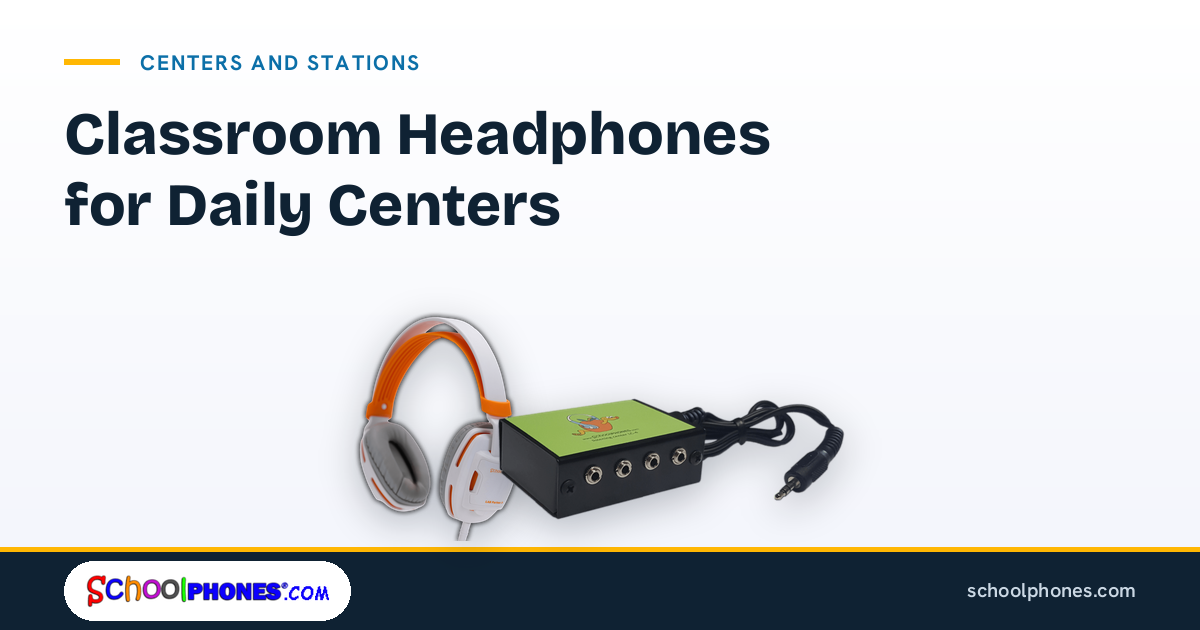

Classroom headphones are now part of everyday instruction in many K-12 settings, not just testing windows. The National Center for Education Statistics has reported that public schools continue to rely heavily on student devices and digital learning tools, which means audio access matters during centers, intervention, independent practice, and blended learning. A standardized headphone plan helps teachers reduce downtime, support consistent routines, and make device-based instruction easier to manage.
For schools, the goal is not simply to buy enough headphones to get through the week. It is to choose classroom headphones that hold up to repeated student use, work with common school devices, and fit a practical 1:1 model so each student has a dedicated set for daily learning.
Where classroom headphones fit into daily instruction
In most elementary and middle school classrooms, audio is built into the school day. Students may listen to phonics activities, recorded directions, read-aloud support, language practice, math intervention, or multimedia lessons. In upper grades, headphones are also useful for research, video-based instruction, and self-paced assignments.
When every student has access to a dedicated set of classroom headphones, teachers can move between routines more smoothly. There is less time spent untangling cords, troubleshooting mismatched plugs, or locating a spare pair before a center rotation begins.
Common daily use cases
- Literacy centers with audio-supported reading programs
- Math stations with adaptive practice platforms
- Independent work on Chromebooks, iPads, and tablets
- Small-group intervention with recorded instructions
- Language learning and speech practice
- Video lessons during blended or flipped instruction
Why standardization matters
Standardizing classroom headphones across a grade level, building, or district makes daily routines easier for both teachers and IT staff. Students learn how to store and handle the same style of headset. Teachers know what replacement parts to keep on hand. Purchasing teams can order in bulk with fewer compatibility questions.
A standard model also helps when classrooms use a mix of devices. If your school rotates between tablets, laptops, and testing devices, it helps to choose headphones designed for school environments and common education technology. Schools comparing device-specific options may find it useful to review headphones for tablets or headphones for iPads before placing a larger order.

Choosing durable models for repeated student use
Daily classroom use is different from occasional home use. Student headphones are handled quickly, plugged in and unplugged often, stored in bins or desks, and carried between stations. That is why durability should be one of the first filters in any buying decision.
Features that matter most in schools
- Volume-limited listening: For younger students especially, volume-limited models capped at 85dB can help support safer listening habits in classroom settings.
- Reinforced or detachable cables: Cables are one of the most common failure points. Detachable options can simplify replacement without replacing the full unit.
- Flexible headbands: A headphone that can handle repeated adjustment is better suited to shared classroom environments across a school year, even when each student has a dedicated pair.
- Simple earcup construction: Fewer fragile moving parts usually means fewer breakages during daily use.
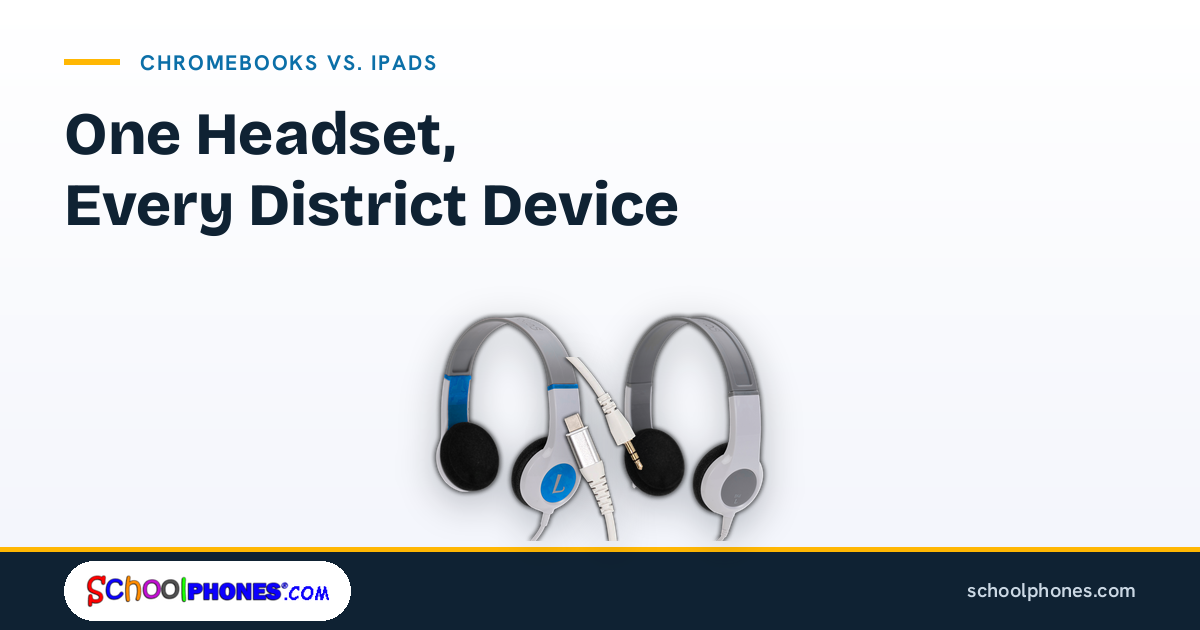
- Standard 3.5mm compatibility: Many school devices still rely on a standard headphone jack, while some classrooms may also need adapters for specific tablets or cases.
Match the model to the age group
Younger students often need lightweight classroom headphones with straightforward controls and a comfortable fit that stays in place during short rotations. Older students may need a slightly more robust build for longer independent work periods. In either case, the best choice is usually the one that balances comfort, durability, and easy storage rather than extra features that add cost or complexity.
For schools buying at scale, it can help to compare options built specifically for education rather than consumer entertainment use. SchoolPHONES® focuses on school-first audio gear designed for classroom devices, testing, and repeated student handling. If you are evaluating models for broad K-12 use, the headphones for schools category is a practical place to compare common formats and features.
Do not overlook testing compatibility
Many schools want one headphone standard that works for both everyday instruction and assessment periods. That can reduce last-minute purchasing and simplify inventory. If your district wants to align daily-use headphones with assessment needs, review requirements for headphones for online testing before finalizing a classroom standard.
Managing one headphone per student in centers
A 1:1 headphone-to-student model is the most practical approach for daily centers and independent work. Each student has one dedicated set assigned to them, rather than rotating communal pairs. This supports better hygiene, clearer accountability, more consistent fit, and less wear from constant redistribution.
In busy classrooms, shared headphone bins often create preventable problems: cords get tangled, ear pads wear unevenly, and no one knows which pair stopped working. A dedicated set per student makes it easier to identify damage early and reinforce care routines.
Simple ways to assign and track headphones
- Label each headphone with a student number or class roster number
- Store each pair in an individual bag, bin slot, or desk space
- Use matching labels on the headphone and storage location
- Keep a short class checklist for damaged plugs, missing ear cushions, or cable issues
- Teach one standard wrap-and-store method for cords
Build headphone use into center procedures
Students are more likely to care for classroom headphones when expectations are part of the routine. Teachers can model how to plug in the jack, adjust the headband gently, lower the volume before starting, and return the set to its assigned place after use.
For younger grades, visual reminders near device stations can help. For upper grades, a quick beginning-of-year procedure lesson is often enough if the storage system is consistent.
Why dedicated headphones work better than shared sets
Dedicated student headphones reduce cross-use concerns and make it easier to maintain a cleaner, more predictable classroom system. They also improve accountability. When one student is responsible for one pair, teachers can spot patterns of misuse, address handling habits early, and avoid the confusion that comes with communal equipment.
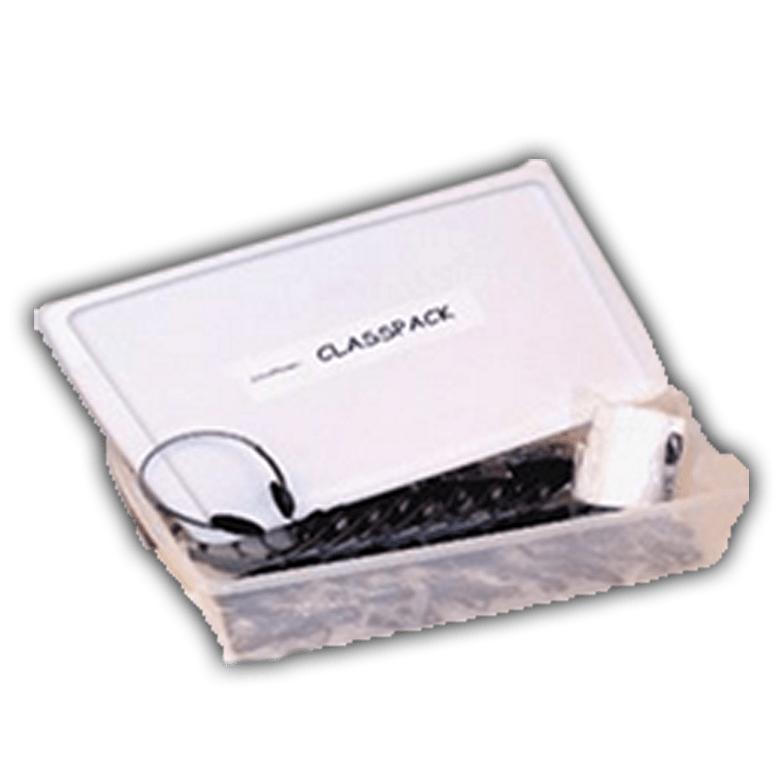
Cleaning, inspection, and quick replacement habits
Even durable classroom headphones need routine care. A simple maintenance plan can extend usable life and reduce disruptions during instruction.
Set a quick inspection schedule
Teachers do not need a complicated process. A brief visual check at the end of the week or before a new unit can catch most issues early.
- Check for bent or loose plugs
- Look for frayed cable sections near the jack and earcup entry points
- Confirm both earcups are attached securely
- Test volume in one or two sample devices if students report sound issues
- Remove any pairs with intermittent audio before they interrupt a lesson
Keep cleaning practical
Always follow the manufacturer’s care guidance for the specific model in use. In general, schools should avoid soaking headphones or using harsh chemicals that can damage ear cushions, plastics, or wiring. A light, routine wipe-down of exterior surfaces and proper dry storage are usually more sustainable than inconsistent deep cleaning.
The bigger operational advantage comes from the 1:1 model: when each student has a dedicated pair, there is less repeated handling by multiple users and less need to manage constant redistribution between classes.
Plan for fast replacement, not last-minute scrambling
No matter how careful a classroom is, some headphones will fail over the course of the year. The best time to plan for replacements is before instruction is interrupted.
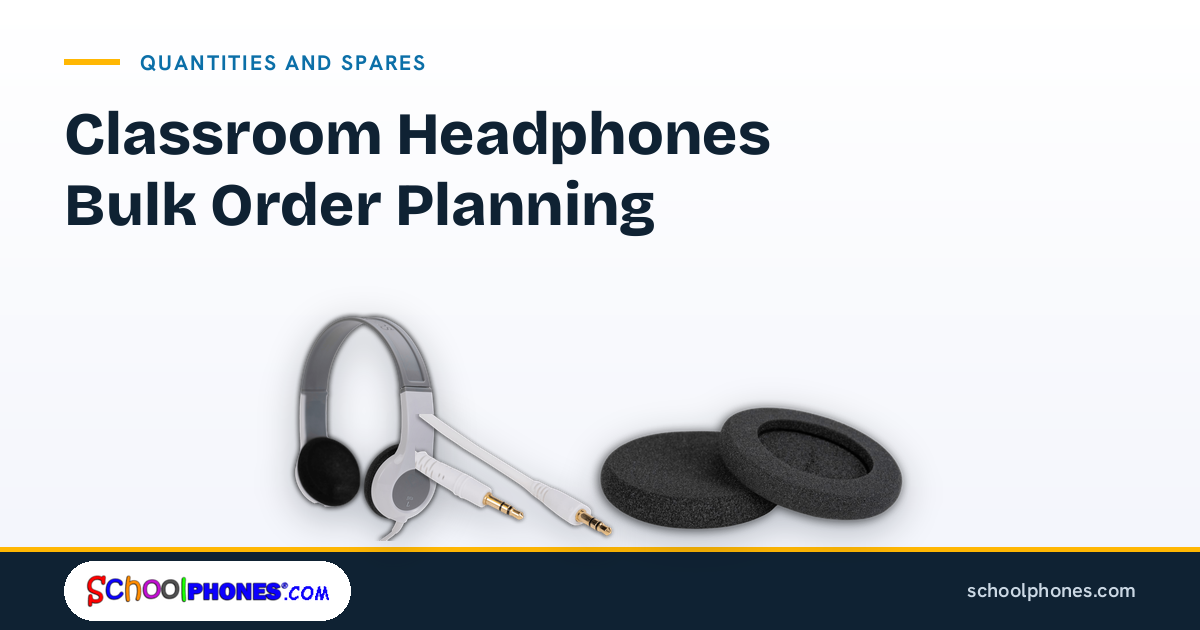
- Keep a small number of unopened replacement units in the grade-level workroom or media closet
- Stock any needed adapters that match your device mix
- If your model uses detachable cables, keep extra cables available
- Document recurring failure points so future orders can be adjusted
For district buyers, this is one reason bulk ordering can be more efficient than piecemeal replacement. A standardized inventory makes it easier to support classrooms consistently across the year.
What teachers should stock at the start of the year
Teachers and school teams can avoid many midyear headaches by setting up a complete headphone routine before students begin regular device rotations. The goal is not to overbuy. It is to have the right supporting items in place from day one.
A practical classroom headphone starter list
- One dedicated headphone per student
- A few clearly designated replacement units for breakage
- Student labels or numbered tags
- Individual storage bags, hooks, or bin spaces
- Any required device adapters
- A simple class procedure for use, storage, and reporting problems
Questions to answer before ordering
- Which devices will students use most often: Chromebooks, iPads, tablets, or a mix?
- Do you need one model that can also support assessment periods?
- Will headphones stay in homerooms, travel with students, or remain on carts?
- Do you want detachable cables or other modular parts for easier replacement?
- How will each student store and identify their assigned pair?
For many schools, the most effective approach is to choose one durable model for everyday classroom use and order enough units to support a true 1:1 setup. That creates consistency for teachers, students, and support staff while reducing avoidable interruptions during centers and independent work.
If your school is ready to standardize classroom headphones, review durable school-ready options at SchoolPHONES®.com. A practical next step is to map your device types, student counts, and storage plan, then request a bulk quote or shop durable school headphones at SchoolPHONES®.com.
FAQ
How many classroom headphones should a teacher order?
The best practice is one dedicated headphone per student, plus a small number of replacements for breakage or new enrollments. This supports hygiene, accountability, and smoother daily routines.
What type of classroom headphones work best for centers and stations?
Look for durable, volume-limited models with a comfortable fit, straightforward controls, and compatibility with your classroom devices. Reinforced or detachable cables are especially useful in high-use settings.
Should schools use the same headphones for daily instruction and testing?
Often, yes. Using one standard model for both daily learning and testing can simplify purchasing and inventory, as long as the headphones meet device and assessment requirements.
How should students store classroom headphones?
Assign each student a labeled storage location such as a bag, bin slot, hook, or desk space. Matching labels on the headphone and storage area help reduce mix-ups and damage.
What should teachers do when a headphone stops working?
Remove it from circulation right away, check for obvious cable or plug damage, and replace it with a designated backup unit. Keeping a few replacements on hand prevents disruptions during instruction.

Leave a Comment!