
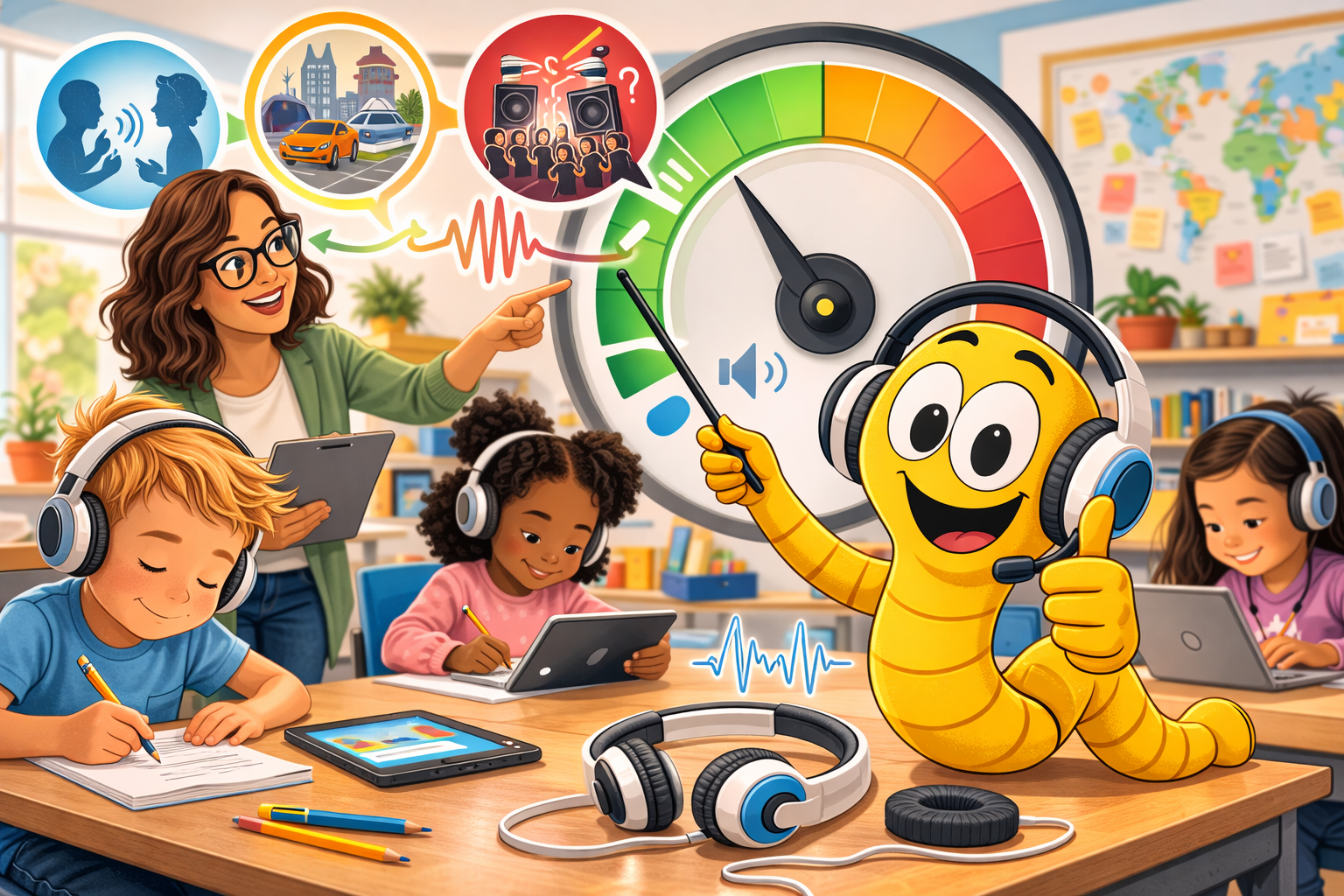
Noise-induced hearing loss in children is preventable — and it starts with the headphones they use at school. With students spending hours daily on Chromebooks, iPads, and tablets for learning, teachers and parents need to understand why volume-limited headphones matter and what the 85dB standard actually means in practice.
The Science Behind 85dB Volume Limiting
The CDC and NIOSH (National Institute for Occupational Safety and Health) recommend a maximum continuous noise exposure of 85 decibels for adults over an 8-hour period. For children, whose auditory systems are still developing, this threshold represents the upper limit of safe listening.
To put 85dB in context:
- Normal conversation: 60-70 dB
- 85 dB limit: roughly equivalent to heavy city traffic
- Unrestricted headphones: can reach 100-110 dB (risk of immediate hearing damage)
- Rock concert: 110-120 dB
Without volume limiting, a child can turn standard headphones to dangerous levels, especially when trying to hear over background classroom noise.
How Volume-Limited Headphones Work
Hardware limiting is the most reliable approach. SchoolPHONES® volume-limited models use a passive resistor circuit that physically caps maximum output at 85dB regardless of the source device’s volume setting. Unlike software-based volume limiters (which can be bypassed by tech-savvy students), hardware limiting cannot be overridden.
Which SchoolPHONES® Models Are Volume Limited?
Our K6 (Small Kids) series features built-in 85dB volume limiting, making them the ideal choice for Pre-K through 2nd grade students. These headphones are specifically designed for younger learners who are most vulnerable to hearing damage and least likely to self-regulate their volume levels.
For older students in the BK (Big Kids) series, full-range audio allows teachers to use the headphones for a wider variety of educational content including music and multimedia production, while still delivering safe listening levels at normal volume settings.
What Teachers Should Know
Volume-limited headphones don’t just protect hearing — they also improve classroom management. When all students listen at safe, consistent levels, there’s less fidgeting with volume controls and fewer complaints about audio being “too loud” or “too quiet.” The standardized audio output creates a more equitable learning environment where every student hears content the same way.
For more on protecting student hearing, visit our tablets headphones guide or explore our full headphone catalog.




Leave a Comment!